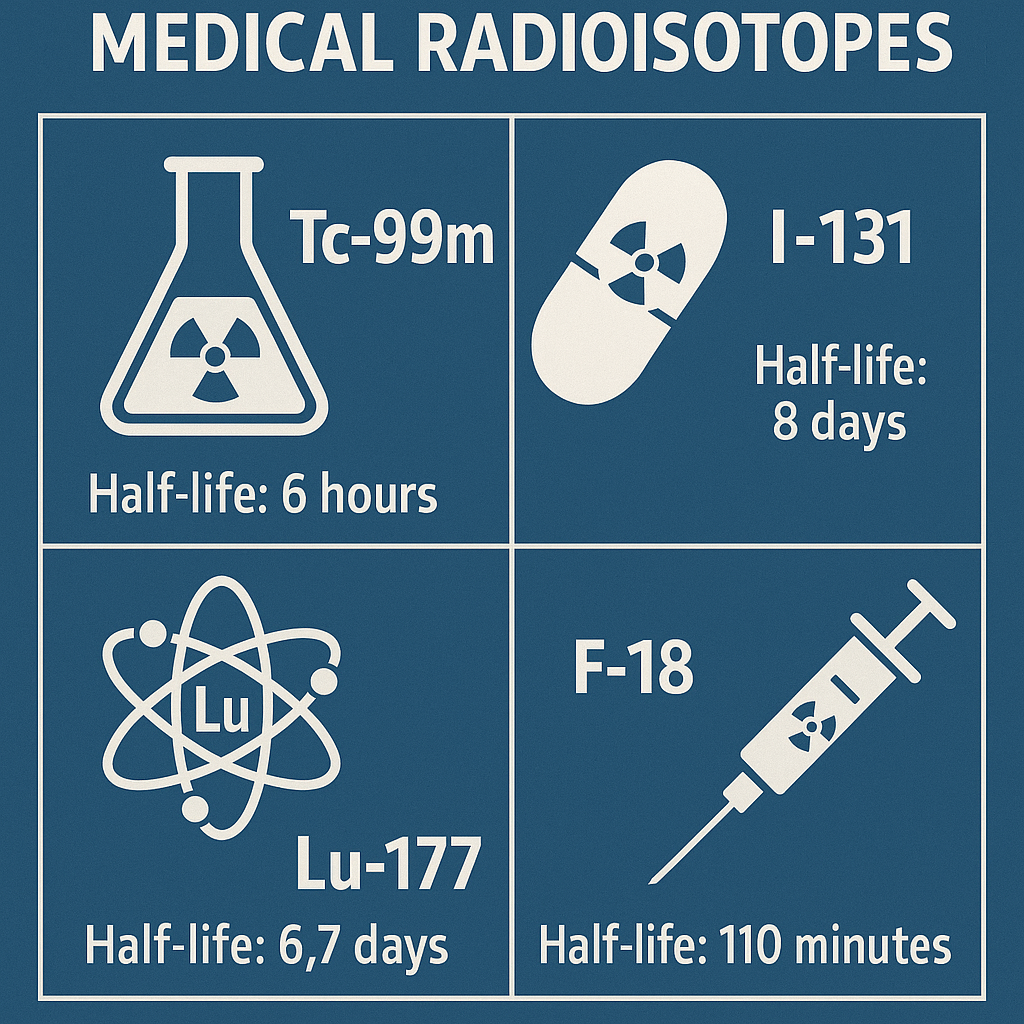
The medical radioisotopes market is undergoing a significant transformation, propelled by the increasing adoption of nuclear medicine in modern diagnostics and therapeutics. As healthcare systems evolve toward precision-based, non-invasive interventions, the role of medical radioisotopes becomes increasingly critical. From advanced imaging procedures to targeted therapies for cancer and cardiovascular diseases, radioisotopes are becoming essential components of the healthcare delivery ecosystem. According to Transparency Market Research, the global medical radioisotopes market was valued at US$ 5.9 billion in 2024 and is expected to reach US$ 14.1 billion by 2035, expanding at a CAGR of 8.1% during the forecast period. This blog delves into the underlying factors shaping this growth trajectory, along with the latest trends and future outlook.
Market Introduction
Medical radioisotopes refer to radioactive substances used
in various diagnostic and therapeutic medical applications. These isotopes emit
radiation that can be captured through specialized imaging equipment, enabling
physicians to visualize and assess internal organs and tissues without the need
for surgical intervention. One of the most widely used isotopes, technetium-99m,
is prized for its ideal physical properties such as a short half-life and
optimal gamma radiation energy, making it suitable for numerous imaging
procedures. On the therapeutic side, isotopes like iodine-131 play a
pivotal role in treating thyroid-related conditions and certain forms of
cancer.
The versatility of radioisotopes has expanded their use
across medical disciplines including cardiology, oncology, neurology,
nephrology, and endocrinology. These isotopes support early detection, disease
staging, and treatment monitoring, improving patient care outcomes while
minimizing invasive procedures. The market has witnessed a rapid expansion in
recent years, thanks to ongoing advancements in radiopharmaceutical technology,
growing disease burdens globally, and increased healthcare infrastructure
investments.
Market Drivers
Growing Awareness of Nuclear Medicine
One of the primary factors fueling the growth of the medical
radioisotopes market is the rising awareness and adoption of nuclear medicine
in clinical settings. Educational initiatives, physician training programs, and
public awareness campaigns are gradually shifting perceptions around nuclear
medicine, emphasizing its safety and efficacy. The emergence of advanced
imaging techniques such as positron emission tomography (PET) and single-photon
emission computed tomography (SPECT) has further highlighted the role of
medical radioisotopes in delivering highly detailed, real-time visualizations
of internal body processes.
The increasing prevalence of chronic diseases such as cancer
and cardiovascular disorders is also necessitating the use of more precise
diagnostic tools. Unlike conventional imaging, PET and SPECT offer functional
insights at a cellular level, aiding in accurate diagnosis and effective
treatment planning. As more patients and physicians recognize the benefits of
early detection and individualized care, the demand for nuclear medicine and
associated radioisotopes is expected to grow substantially.
Rising Demand for Personalized Medicine
Personalized medicine, which tailors medical treatment to
the individual characteristics of each patient, is reshaping modern healthcare.
Medical radioisotopes are central to this shift, particularly in targeted
radionuclide therapy (TRT) where radioactive particles are directed
specifically at diseased tissues such as tumors, sparing healthy cells from
unnecessary radiation. This approach not only enhances therapeutic efficacy but
also significantly reduces side effects.
The advent of genomic medicine and molecular
diagnostics has facilitated more accurate targeting of cancer cells using radiopharmaceuticals,
making treatments more precise and outcomes more predictable. Moreover, with
increasing patient preference for non-invasive and personalized care,
radioisotope-based therapies are becoming an attractive alternative to
traditional chemotherapy and surgical interventions. This growing inclination
toward tailored treatments will continue to be a strong market driver in the
years to come.
Segment Analysis
Cardiology Emerges as the Leading Application Segment
Cardiology remains the largest and most dynamic application
segment within the medical radioisotopes market. The rising global burden of cardiovascular
diseases (CVDs), including heart failure, coronary artery disease, and
arrhythmias, has heightened the need for accurate and early diagnosis. Nuclear
cardiology techniques, particularly myocardial perfusion imaging (MPI)
using isotopes like technetium-99m and thallium-201, enable clinicians to
evaluate blood flow to the heart and detect areas of ischemia or infarction.
What sets nuclear cardiology apart is its ability to provide
functional information about the heart, in contrast to anatomical imaging
offered by modalities such as CT or MRI. This allows for early intervention,
improved risk stratification, and better management of patients with known or
suspected heart disease. Additionally, the non-invasive nature of these imaging
techniques enhances patient compliance, making them a preferred diagnostic
approach among both physicians and patients.
Regional Outlook
North America Maintains Market Dominance
North America led the global medical radioisotopes market in
2024 and is expected to maintain its dominant position through 2035. The region
boasts a well-established healthcare infrastructure, high levels of public and
private healthcare spending, and a strong presence of leading pharmaceutical
and radiopharmaceutical companies. The United States, in particular, has been a
hub for nuclear medicine research and development, with institutions actively
investing in next-generation isotopes and imaging technologies.
The increasing prevalence of chronic diseases and the
availability of favorable reimbursement policies further support the growth of
the market in this region. Regulatory initiatives such as the FDA’s fast-track
approvals for novel radiopharmaceuticals and public-private partnerships to
secure isotope supply chains are also contributing to market expansion. Canada,
meanwhile, has invested significantly in cyclotron technology for local isotope
production, reducing reliance on imported materials and enhancing national
healthcare resilience.
Competitive Landscape
The global medical radioisotopes market is moderately
consolidated with several key players focusing on strategic partnerships,
acquisitions, and new product development to strengthen their market positions.
Companies such as Siemens Healthineers, Lantheus Holdings, Eli Lilly,
Cardinal Health, and Curium are at the forefront of innovation in
the nuclear medicine space. These players are investing heavily in expanding
their radiopharmaceutical portfolios, enhancing distribution capabilities, and
developing novel production technologies.
Recent Developments
- NorthStar
Medical Radioisotopes LLC made headlines in January 2023 by
successfully producing molybdenum-99 (Mo-99) without using highly
enriched uranium (HEU), a significant milestone for sustainable isotope
production in the U.S.
- In
March 2022, Bracco Imaging launched Blue Earth Therapeutics,
a subsidiary dedicated to advancing targeted radiopharmaceutical therapies
for oncology, illustrating the industry's shift toward therapeutic
applications.
The growing emphasis on domestic production, innovation in
isotope delivery systems, and collaboration with research institutions are
likely to shape the competitive dynamics of the industry in the coming decade.
Future Outlook
Looking ahead, the medical radioisotopes market is poised
for sustained growth, driven by technological advancements, growing global
healthcare expenditure, and increasing patient acceptance of nuclear medicine.
The development of novel isotopes with improved targeting and
therapeutic properties will open up new avenues for treating complex diseases,
particularly in oncology and neurology. Additionally, the integration of
artificial intelligence in imaging diagnostics is expected to enhance the
accuracy and efficiency of radioisotope-based procedures.
Government initiatives supporting nuclear medicine
infrastructure, especially in emerging economies, are expected to
further broaden the market base. As the focus intensifies on personalized,
patient-centered care, medical radioisotopes will remain a cornerstone in
both diagnostics and therapeutics, reinforcing their indispensable role in
modern medicine.
The medical radioisotopes market is at the forefront of
innovation in healthcare, offering transformative solutions for diagnostics and
targeted treatment. With strong growth projections, rising global awareness,
and the expanding landscape of personalized medicine, the next decade promises
substantial opportunities for stakeholders across the value chain. As
investment in research and infrastructure continues to grow, medical
radioisotopes will play a central role in shaping the future of precision
healthcare.
Access our report for
a deep dive into the critical insights –
https://www.transparencymarketresearch.com/medical-radioisotopes-market.html


0 #type=(blogger):
Post a Comment